


1. What is Digital Marketing?
Digital marketing refers to the use of digital channels, platforms, devices and technologies to promote products, services or brands, engage with target audiences, and drive measurable actions. Rather than relying only on traditional offline channels (TV, print, radio, billboards), digital marketing uses the internet, mobile devices, social media, search engines, email and other digital media.
Importantly, it offers:
- Measurability: you can track clicks, conversions, cost per acquisition, etc. Punjab State Open University+1
- Precision targeting: you can reach specific audiences (by device, geography, behaviour) more easily. Simplilearn.com
- Interactivity: audiences can respond, engage, share, comment—rather than being passive recipients. Punjab State Open University
Hence, scope of digital marketing is quite broad, and growing.
2. Core Components & Channels
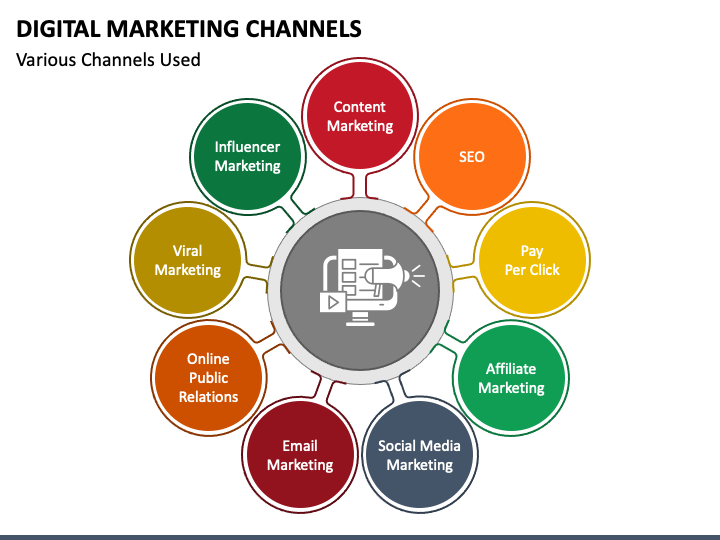
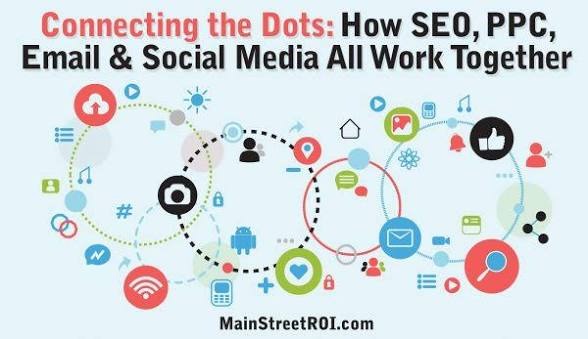
To understand the scope, it helps to break down what digital marketing encompasses. Some of the main components include:
- Search Engine Optimisation (SEO): improving organic visibility on search engines. IJRTI+1
- Search Engine Marketing (SEM) / Pay‑per‑click (PPC) advertising: paid search ads to capture intent. Simplilearn.com+1
- Social Media Marketing (SMM): using platforms like Facebook, Instagram, LinkedIn, Twitter to build brand awareness, engage audiences, run ads. Simplilearn.com+1
- Content Marketing: creating valuable content (blogs, videos, infographics) to attract and retain a target audience. Wikipedia
- Email Marketing: building and nurturing relationships with leads or customers via email campaigns. Delhi School of Internet Marketing
- Mobile Marketing: reaching audiences on mobile devices (apps, SMS, mobile-optimised websites). WiZR
- Analytics & Data‑Driven Marketing: measuring performance, optimising campaigns, using insights to guide strategy. E&ICT Academy+1
- Emerging and specialised areas: influencer marketing, affiliate marketing, display advertising, remarketing/retargeting, automation, AI‑driven marketing. iidmc.org+1
6
Because there are so many facets, the scope becomes large and varied.
3. Business & Market Perspective: Why the Scope of digital marketing is Expanding
Several factors contribute to the widening scope of digital marketing:
- Increasing internet penetration & mobile usage: More people are online, often on mobile devices, which means businesses must meet them where they are. For instance, in many markets mobile traffic has overtaken desktop.
- Shift from offline to online buying/engagement: Consumers increasingly research, compare, purchase online; businesses must adapt their marketing accordingly. WiZR+1
- Cost‑effectiveness and scalability: Digital campaigns can often be set up with modest budgets compared to large traditional media buys, and scaled or adjusted in real time. PIIM
- Data, analytics & personalisation: The ability to gather user‑level data, segment audiences, personalise messaging makes digital marketing particularly effective. E&ICT Academy
- Global reach & remote work: A brand or individual can reach global audiences online; a digital marketer can work remotely or freelance across geographies. IIDE – The Digital School
All of these contribute to strong – and growing – scope for digital marketing.
4. Career Scope & Job Opportunities
From a career perspective (which is a key part of “scope” when we discuss what one can do with digital marketing), the opportunities are substantial:
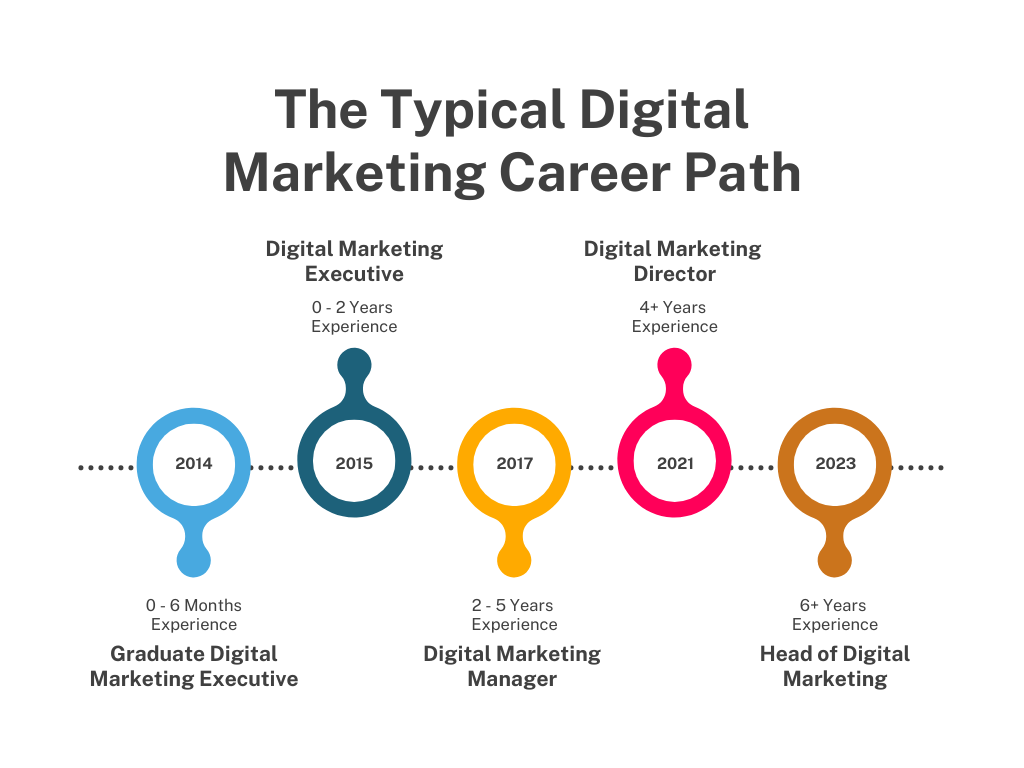
4.1 Roles and career paths
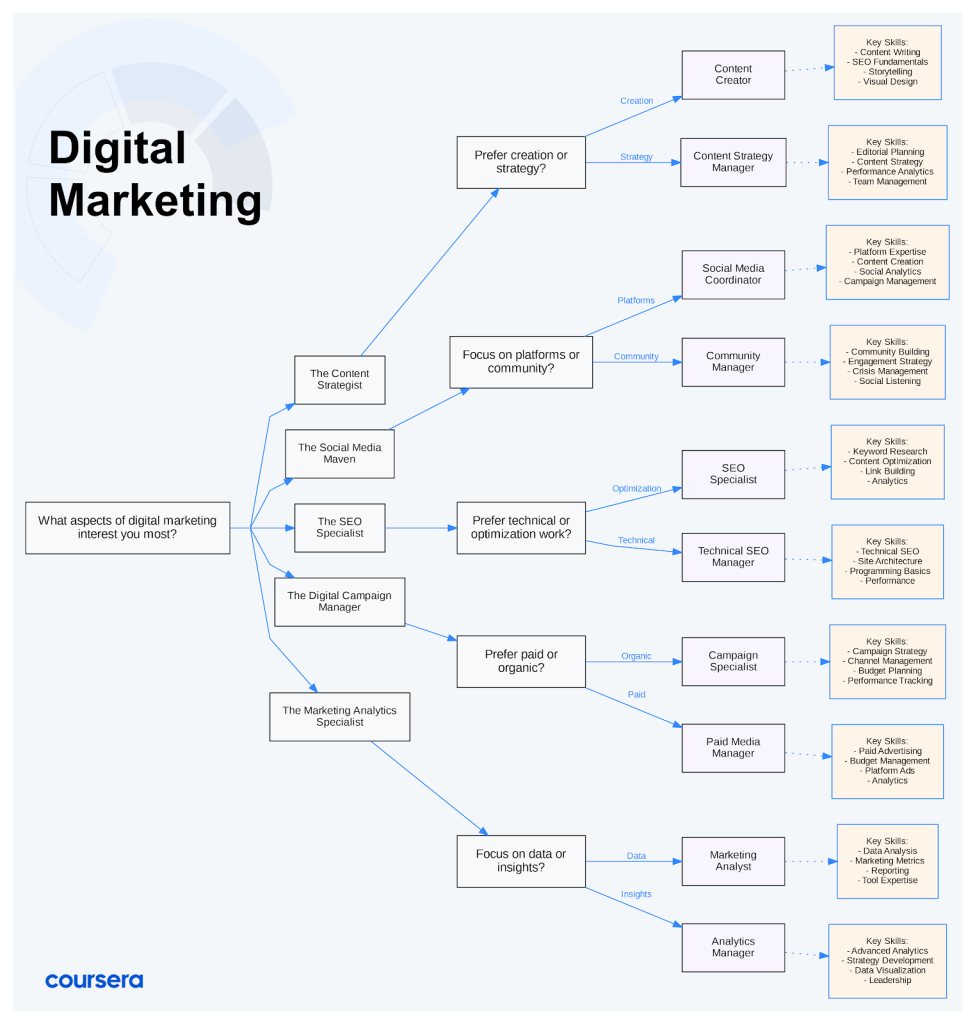
Some of the common roles in digital marketing:
- SEO Specialist/Executive
- PPC / SEM Manager
- Social Media Manager / Specialist
- Content Strategist / Content Marketing Manager
- Email Marketing Specialist
- Digital Marketing Analyst
- Growth Hacker / Performance Marketer
- Digital Marketing Manager / Head of Digital
- Freelance Digital Marketer / Consultant
In India, the demand for these roles has grown strongly. For example, one source notes India created 900,000+ digital marketing jobs in 2024 alone. IIDE – The Digital School
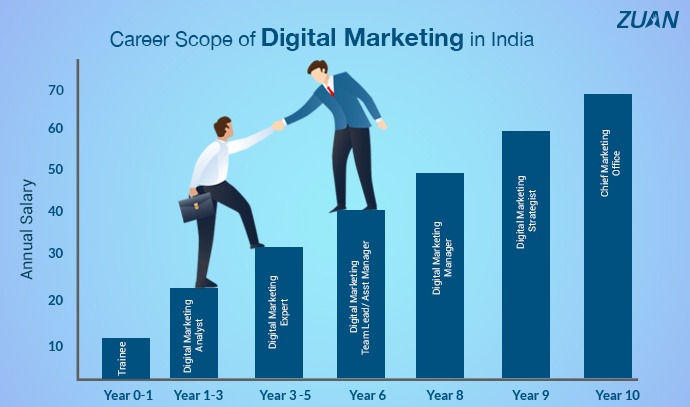
4.2 Salary and growth
According to one source:
- Freshers: ~ ₹3–6 LPA (lakhs per annum) in India
- Mid‑level: ~ ₹6–12 LPA
- Managerial: ~ ₹12–25 LPA
- Leadership: ~ ₹25–50 LPA and above IIDE – The Digital School
Of course, these are indicative, vary by location, skill, industry, company size.
4.3 Freelance & entrepreneurship opportunities
Because digital marketing work can often be done remotely, individuals can build freelance careers, start digital marketing agencies, consult for multiple clients, or build their own online businesses. Delhi School of Internet Marketing
4.4 Why this matters
If you’re evaluating “scope” in terms of what you can do, the key takeaway is: digital marketing offers multiple entry points, diverse career pathways, ability to switch between agency/brand/freelance, and potential for upward growth as you gain experience and specialise.
6
5. Scope of digital marketing in the Indian Context
Since you’re located in Delhi, India, it’s useful to look at how the scope plays out locally.
5.1 Rapid digital adoption
India has witnessed large growth in internet and mobile users, e‑commerce, digital payments, social media usage, which means businesses increasingly need digital marketing expertise to reach and engage. WiZR+1
5.2 Diverse industries & geographies
From small local businesses to large brands, from metro cities to Tier‑2/3 towns, almost all are adopting some digital marketing. This creates a broad base of demand, not just in major metros. (Though metros may still have higher-paying roles.)
5.3 Skill gaps & demand
Many businesses report shortage of skilled digital marketers who can blend strategy + execution + analytics + modern tools. This means for someone who upskills, there’s good potential. For example, one government document lists SEO, email marketing, YouTube marketing, WordPress website building as viable options. Directorate General of Employment
5.4 Regional & remote possibilities
Because digital marketing is not always location‑bound, even professionals outside major metros (e.g., Delhi NCR, Bangalore, Mumbai) can work with national/international clients if they build skills and portfolio.
5.5 Longevity and adaptability
In India, while many sectors are still at early stages of digital transition, the trend is only accelerating. For instance, with growth in D2C brands, social commerce, influencer marketing, local businesses going online — it means the scope is expected to remain strong. staragile.com
6. Future Trends & How the Scope is Evolving
Understanding the scope means not just current state, but where it’s headed. Some major future‑trends shaping digital marketing:
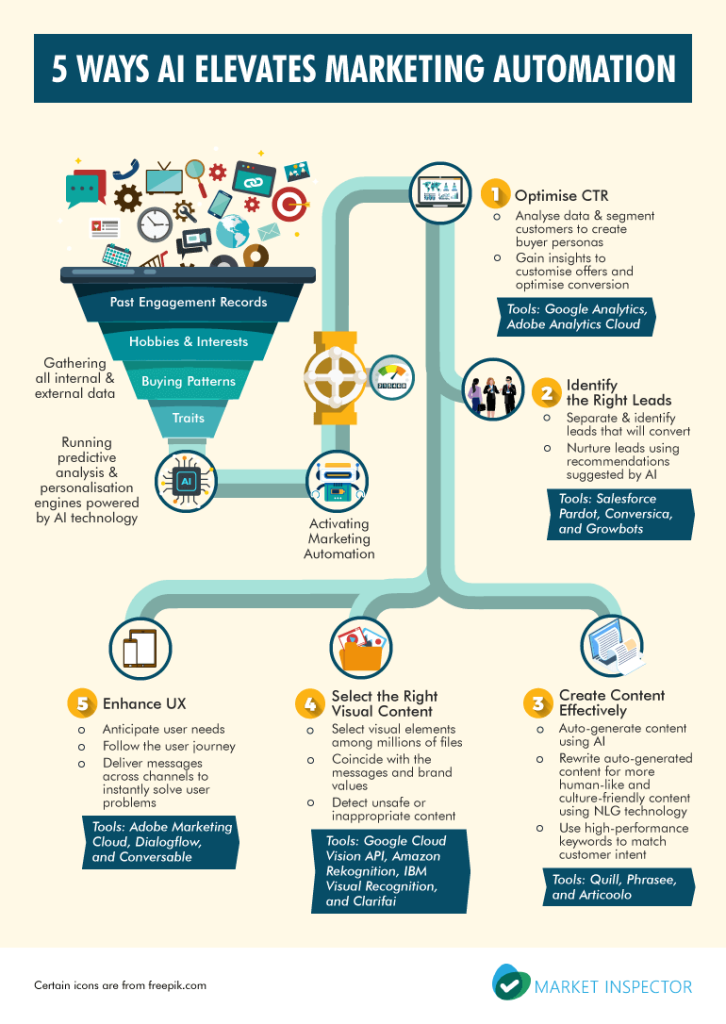
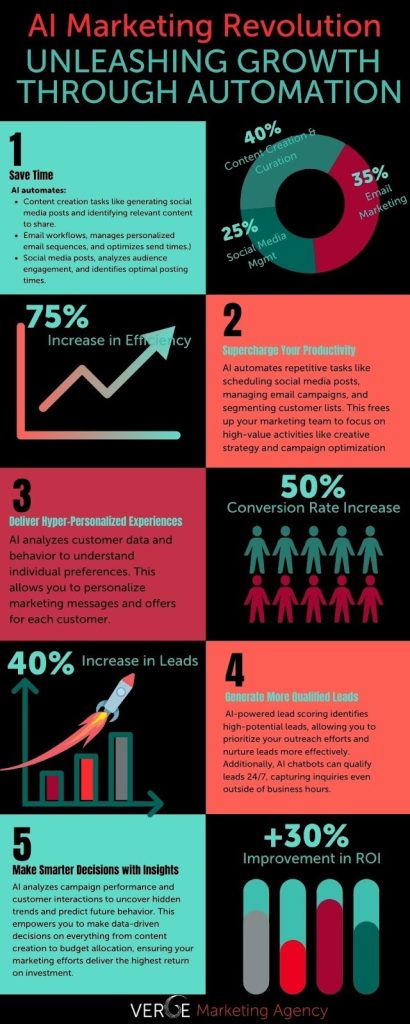
6.1 Automation, AI & Machine Learning
Digital marketing is increasingly being enhanced by AI/ML: automating campaign optimisation, personalisation, chatbots, programmatic advertising, predictive analytics. Uttarakhand Open University+1
This means marketers need to upskill: knowing tools, platforms, data, automation, and decisions guided by insights rather than just manual. E&ICT Academy
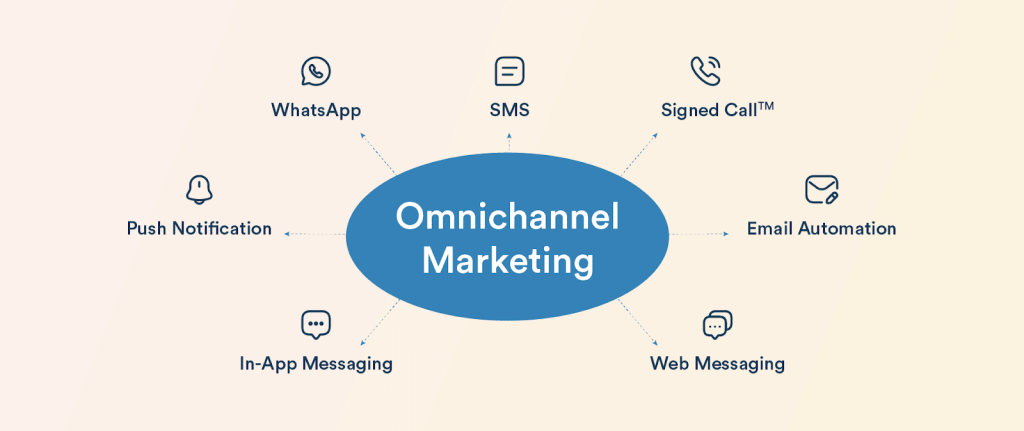
6.2 Omnichannel & Customer Experience Integration
Customers expect seamless experience across devices / channels: mobile, desktop, offline‑to‑online. Marketing strategies are evolving to integrate these channels (versus silos). Uttarakhand Open University
6.3 Data Privacy, Regulation & Ethical Marketing
As more data is used (for targeting, personalisation), regulations (GDPR‑style, local laws) and consumer concerns about privacy increase. Marketers must adapt. This will influence how digital marketing is done.
6.4 New Formats & Platforms
- Short‑form video (TikTok‑style), live streaming, interactive content
- Voice search / smart devices
- Augmented Reality (AR) / Virtual Reality (VR) experiences
- Social commerce, influencer economy growing
These create new spaces for digital marketing, expanding its scope.
6.5 Analytics & Performance Focus of scope of digital marketing
As businesses want measurable ROI, digital marketing will increasingly be judged on performance metrics (conversion rates, lifetime value, retention) rather than just reach. This raises the bar for skillsets.
Thus, the future scope is not static; to unlock it, marketers must adapt to new technologies, new consumer behaviours, and new platforms.
6
7. What This Means For Businesses & Brands
From the business perspective, the broad scope of digital marketing translates into key opportunities:
- Reach a wider/more targeted audience: Instead of mass‑market slog, brands can find niche audiences.
- Better engagement & two‑way interaction: Social media, content, etc allow brands to talk with consumers, not just at them.
- Measurable campaigns, quicker feedback loops: Marketers can test, iterate, optimise, rather than wait months.
- Cost efficiency and scalability: Smaller budgets can still deliver good results if deployed smartly; campaigns can scale up/down.
- Build brand in new ways: Influencer marketing, social proof, content communities — digital marketing opens doors beyond the traditional ad‑centric model.
Because of these benefits, many companies (large and small) are investing heavily in digital marketing, which in turn boosts the scope for professionals.
8. Challenges & What You Should Be Aware Of
While the scope is large, it’s not without challenges. Being aware of them helps you realistically assess the opportunity.
- Rapid change & skill obsolescence: Digital channels, algorithms, platforms, user behaviours change quickly — what works today may not tomorrow.
- Saturation & competition: Many people are entering the field; simple “do SEO” or “run ads” is not enough — you need deep, specialised skills.
For example, on Reddit one user commented:
“Yes it has good scope but it’s going to be very hard for anyone to land a good paying job in digital marketing now … otherwise not possible.” Reddit - Data overload & privacy issues: With so many metrics, tools and platforms, knowing which data matters is a skill. Also privacy laws can limit what you can do.
- Return on Investment (ROI) pressure: Businesses often expect quick wins; just building presence isn’t enough — you must deliver tangible results (leads, sales, engagement).
- Dependence on platforms: A lot of digital marketing strategy depends on third‑party platforms (Google, Facebook/Meta, etc). Changes in their policies or algorithms can affect your campaigns.
So while the scope is large, success often demands continuous learning, adaptability, and differentiation.
9. How to Leverage the Scope of digital marketing – What Should You Do
If you want to tap into this scope—whether as a professional, entrepreneur, or brand—here are actionable steps:
- Build foundational skills: Learn the basics of SEO, PPC, social media, content marketing, analytics. Use free/paid courses.
- Choose an area of specialisation: After the foundation, pick one or two domains (e.g., performance marketing, influencer marketing, mobile marketing, analytics) and go deep.
- Work on real projects: Theory is useful, but implementing campaigns, analysing results, optimising is what makes the difference.
- Stay updated: Follow industry blogs, attend webinars, keep an eye on new platforms/technologies (AI, AR, voice) so you don’t fall behind.
- Build portfolio & proof: Whether you’re job‑seeking or freelancing, show results (campaign outcomes, metrics improved, case studies) rather than just certificates.
- Network & brand yourself: Engage in online forums, LinkedIn, local meet‑ups. For businesses/brands ensure you have strong digital presence (website, social handles, content).
- Understand business & metrics: A good digital marketer isn’t just about running ads—understanding business KPIs (cost per acquisition, customer lifetime value, retention) adds enormous value.
- Consider freelancing/agency route: If you build enough skill and reputation, you can work as a consultant or start your own digital marketing venture.
- Adapt to local context + global opportunities: In India, local businesses, startups, niche sectors are growing; globally, remote work is possible—so you have flexibility.
By doing these, you position yourself to fully leverage the broad scope of digital marketing.
10. Summary & Key Takeaways
- The scope of digital marketing is vast and growing—encompassing many channels, tools, strategies, devices and platforms.
- For businesses it means the ability to reach, engage, measure and optimise in ways that were not possible in traditional marketing.
- For professionals, the scope translates into many career paths, job types, freelance/entrepreneurial opportunities, and growth potential—especially in a market like India where digital adoption is strong.
- However, the field is also dynamic, competitive and demands continuous learning and practical results.
- Future trends (AI, automation, new formats, omnichannel experiences) will expand the scope further, but also raise the bar for skillsets.
- If you’re willing to invest in skill‑building, real execution, and staying updated, you can tap into a promising and evolving career or business path.